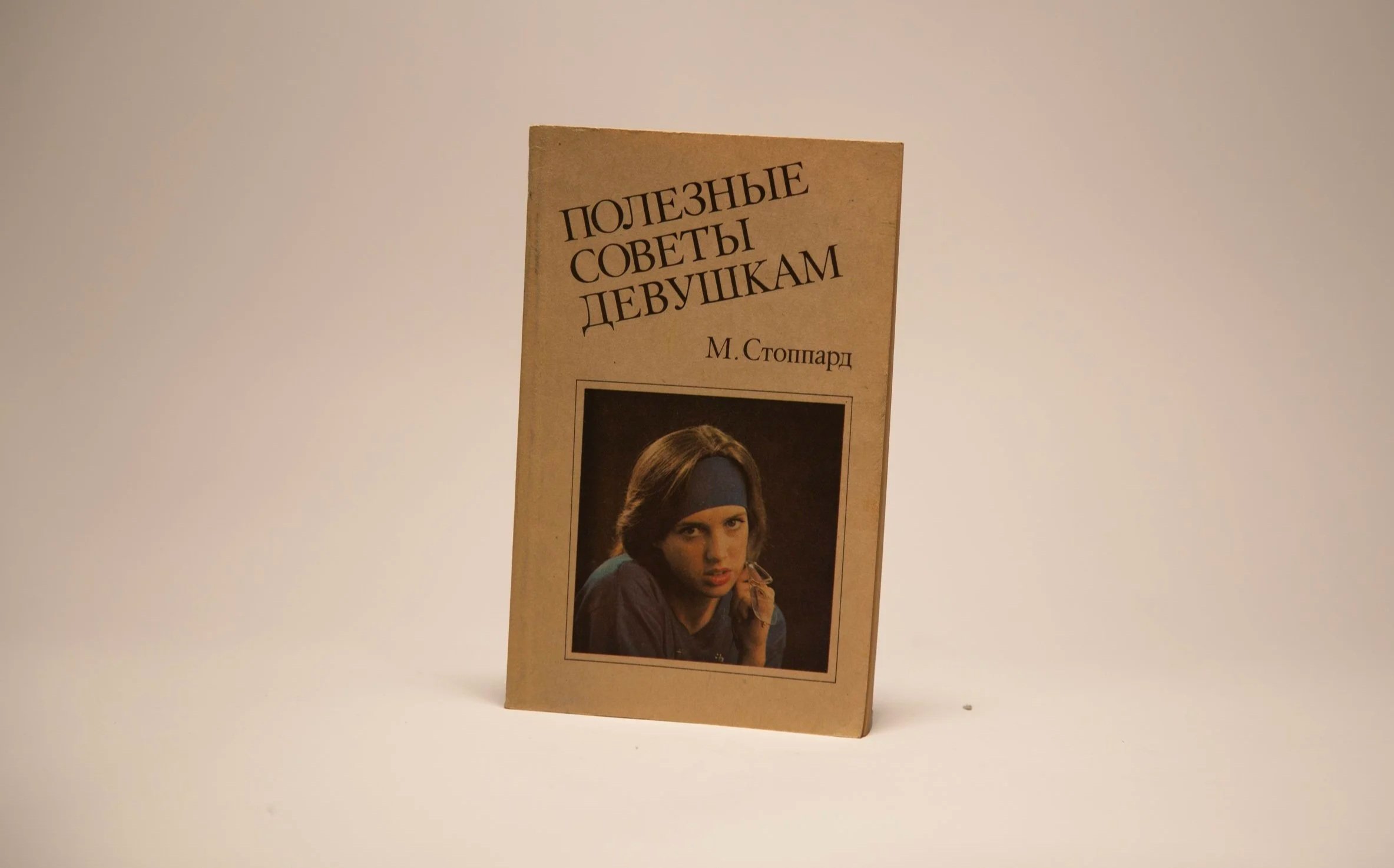
BIBLIOGRAPHIC REFERENCE: Stoppard, Miriam. Every Girl’s Life Guide. Translated by N. M. Laiko. Dorling Kindersley, 1991.
This is a Russian translation of Every Girl’s Life Guide by Dr. Miriam Stoppard. The popular book was first published in 1987 by Dorling Kindersley, London, and has since been republished multiple times. This is a translation into Russian published in 1991 of the guide’s 1987 edition. Chapters cover menstruation, healthy eating, exercise, hair and skincare, romantic relationships, sex, and birth control.
In 1990, sex education materials designed for women were not readily available. Yet there was interest. At the same time, publishing houses, required for the first time to find new markets and customers, brought popular titles to the market. In an example of this effort, the publishing house Progress was considering publishing Our Bodies, Ourselves, according to a 1991 magazine article. But there is evidence that the text eventually appeared: The advocacy and education group Women’s Health in St. Petersburg published an online version of the text in 2007. That group was founded in 1993 and has contributed articles to “AIDS, Sex, Health” a periodical published since 1991 in Soviet successor countries. The availability of family planning services was limited in the early 1990s, with 41% of women reported to use traditional methods that were considered unreliable. Sterilization, an option that had been outlawed since the 1930’s was legalized in 1993. Access to contraception improved in 1989-1993, with the share of women who considered access to contraception adequate increasing to 38% from 12%.
Gynecological healthcare such as birth preparation lagged the West, and abortion was the main method of birth control since other methods of contraception were not reliably available. While the debate about abortion in the West was about morality, Soviet attention on the issue centered on the lack of access to adequate contraception.
Francine du Plessix Gray’s book Soviet Women: Walking the Tightrope, published in 1989 by Doubleday, was revelatory for American women about the lives of Soviet counterparts. Some Soviet women complained of “too much equality” and yearned for more traditional roles, such as time to stay home to care for children, rather than working.