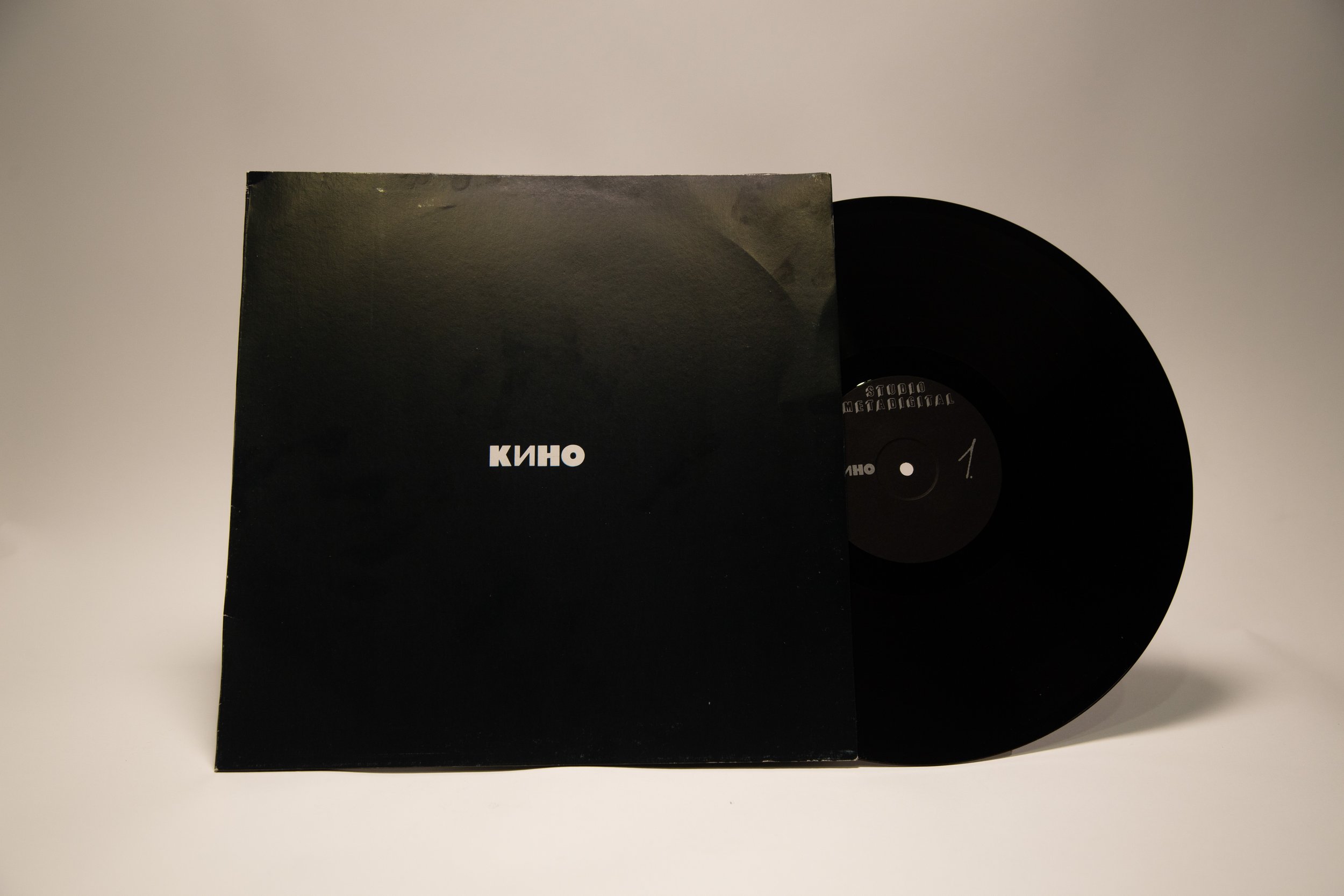
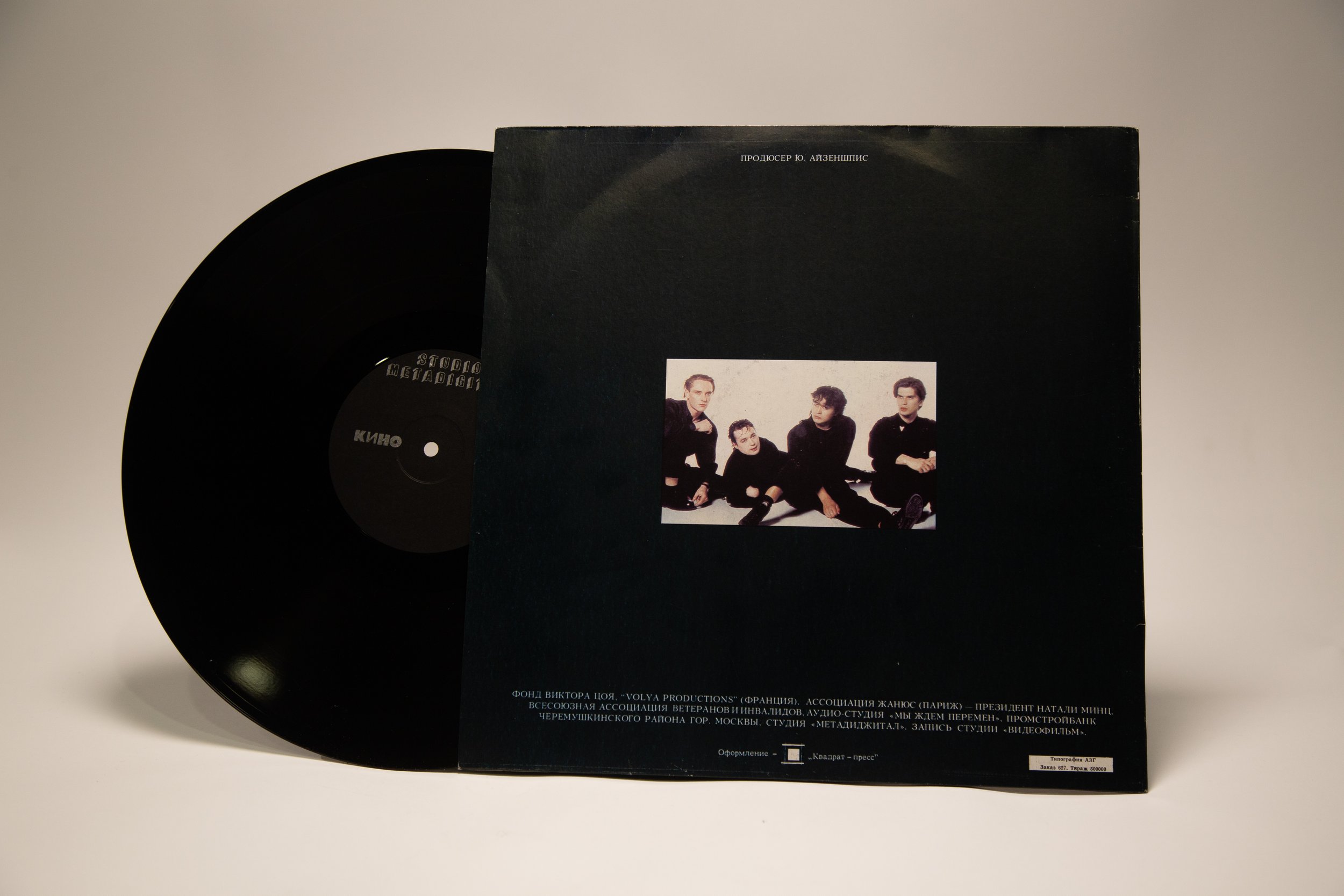
BIBLIOGRAPHIC REFERENCE: Kino. “My Zhdem Peremen.” IU. Aizenshpis, Studio Metadigital, Moscow.
This is a vinyl record purchased at the flagship Melodiya store at the Arbat in Moscow in 1991. In the early 1990s, the days of bootleg cassette recordings of popular Soviet bands like Kino were largely past, and the music had been embraced by the official arts establishment.
Kino was a rock band that formed in Leningrad in 1982 whose music became an anthem of Soviet youth in the late glasnost period. The music remained popular even after its lead singer and songwriter, Viktor Tsoi, died in a car crash in August 1990, aged 28. The band’s official and unofficial recordings and souvenirs related to the band were ubiquitous in the early 1990’s in Moscow.
The government used popular music as a propaganda tool by controlling and censoring production of optimistic melodies with patriotic and sentimental lyrics as a way to build support for socialist ideals. Rock music was a departure from this tradition. Kino rose to fame playing in underground clubs and in apartments. Kino’s first album was produced by Boris Grebenshiko, the star of the Soviet group Aquarium. The group was later embraced by the Soviet arts establishment in perestroika years and enjoyed artistic freedom, playing large concerts and starring in movies, Assa (1987) and The Needle (Igla) (1988). The band’s music would have reached American audiences through the compilation “Red Wave,” a double album of underground Soviet bands released in 1986 and produced by Joanna Stingray.
Tsoi was born in Leningrad in June 1962 of Korean heritage. He attended arts school but dropped out to focus on music.
One of Tsoi’s songs, “Peremen” (Change), became an anthem of the perestroika years: “Our hearts are longing for change/Our eyes are longing for change/It’s in our laugh, and in our tears.” Since then, it has been used in pro- and anti-Putin rallies, and at Euromaidan in 2014. Activists in Belarus sang it in an anti-Lukashenko protest march in 2020. In South Korea, Tsoi was popular among student activists in the early 1990s “both as an anti-authority figure and a beacon of socialism.” The 1987 song and album “Gruppa krovi” (Blood Type) is a reference to the Soviet military uniform patch indicating a soldier’s blood type, in reference to the Soviet-Afghan war ongoing at the time of the song’s release.
Another song, Kamchatka, is a jaunty love song about the Far Eastern peninsula: “It’s a strange place… it’s a sweet word… I found love here… I try to forget.”