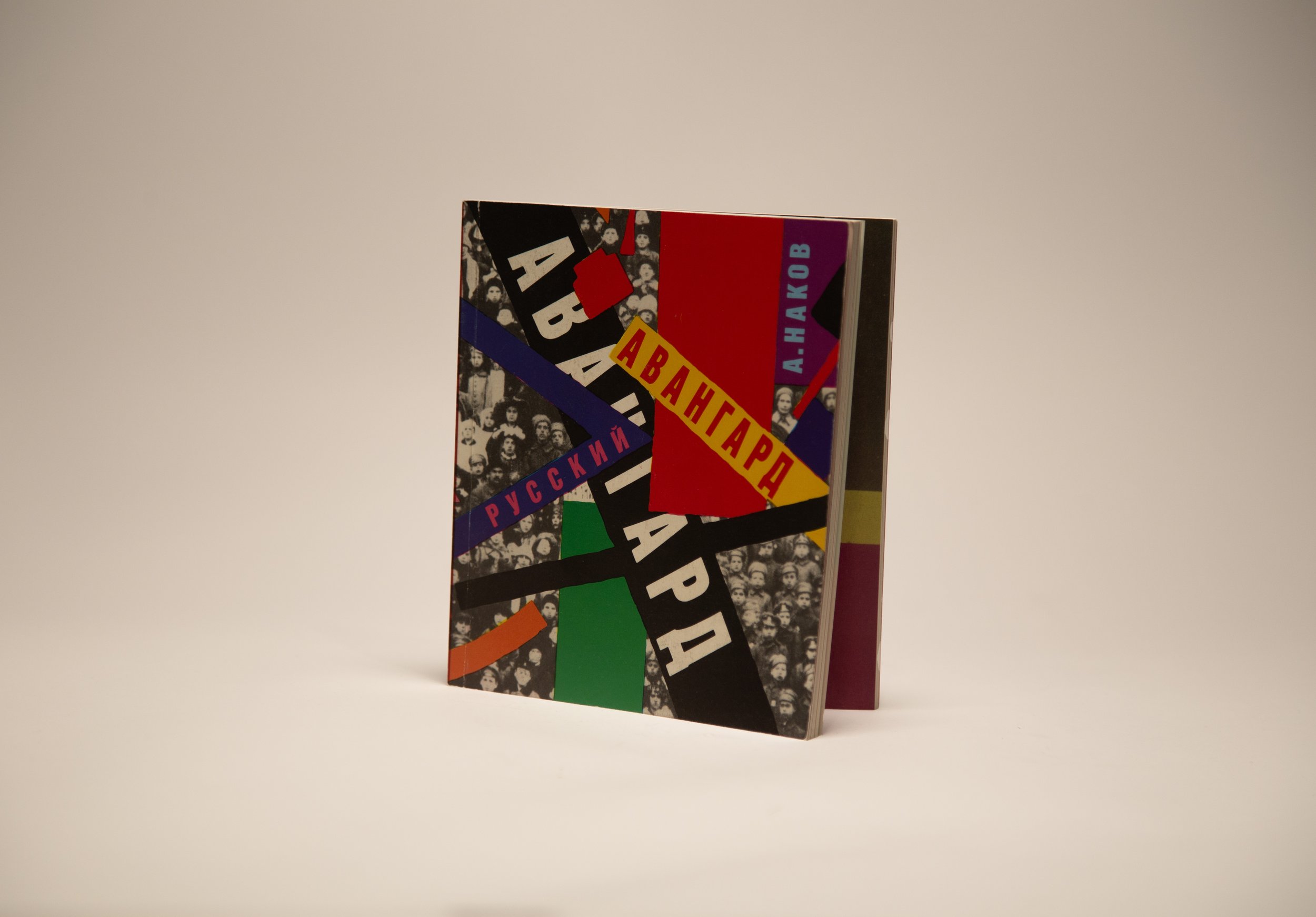
BIBLIOGRAPHIC REFERENCE: Nakov, Andrei. Russkii Avangard. Translated by E. M. Titarenko, Iskusstvo, 1991.
The glasnost period saw a resurgence in interest in the 1920’s and avant-garde artists of the time. This catalog, published in 1984 in French and translated into Russian in 1991, includes an essay by art historian Andrei Nakov.
After the 1917 revolution, avant-garde artists who had been ignored by the tsarist establishment took charge of art museums, related policy and education. This lasted only briefly, until the start of NEP (New Economic Policy) in 1921, when the government retook control of culture. Official Soviet policy suppressed avant-garde art, turning the short period into a topic of keen interest when archives opened during the glasnost years.
A number of museum and gallery exhibits took place about avant-garde art in the glasnost period and after the end of the Soviet Union. For example, in 1992, the Guggenheim Museum in New York staged an exhibit called The Great Utopia: Russian and Soviet Avant-Garde, 1915-1932. At the time, it was the largest show on the topic ever at a US museum. It collected paintings, posters, and architectural models of provincial museums throughout the former Soviet Union. A review of the show described the connection between the agitprop posters, Malevich paintings, and entries to Stalin’s competition for the Palace of Soviets structure, arranged around the museum’s trademark spiral, emphasized how it was possible to view the exhibit’s “symbols of emancipation” as a complete narrative: “For we ascend the the spiral with mountains dread. We know how this story will end. The avant-garde will fail. Painters will be forced to paint tractors, architects to design neoclassical palaces. Workers exalted by the posters will be exploited by party bosses. Millions will die in the gulags.”
Also in 1992, two other exhibits on the Soviet propaganda porcelain occurred: the Cooper-Hewitt National Design Museum’s Revolution, Life and Labor: Soviet Porcelains (1981-1985) and the Art Institute of Chicago’s News from a Radiant Future: Soviet Porcelain from the Collection of Craig H. and Kay A. Tuber.