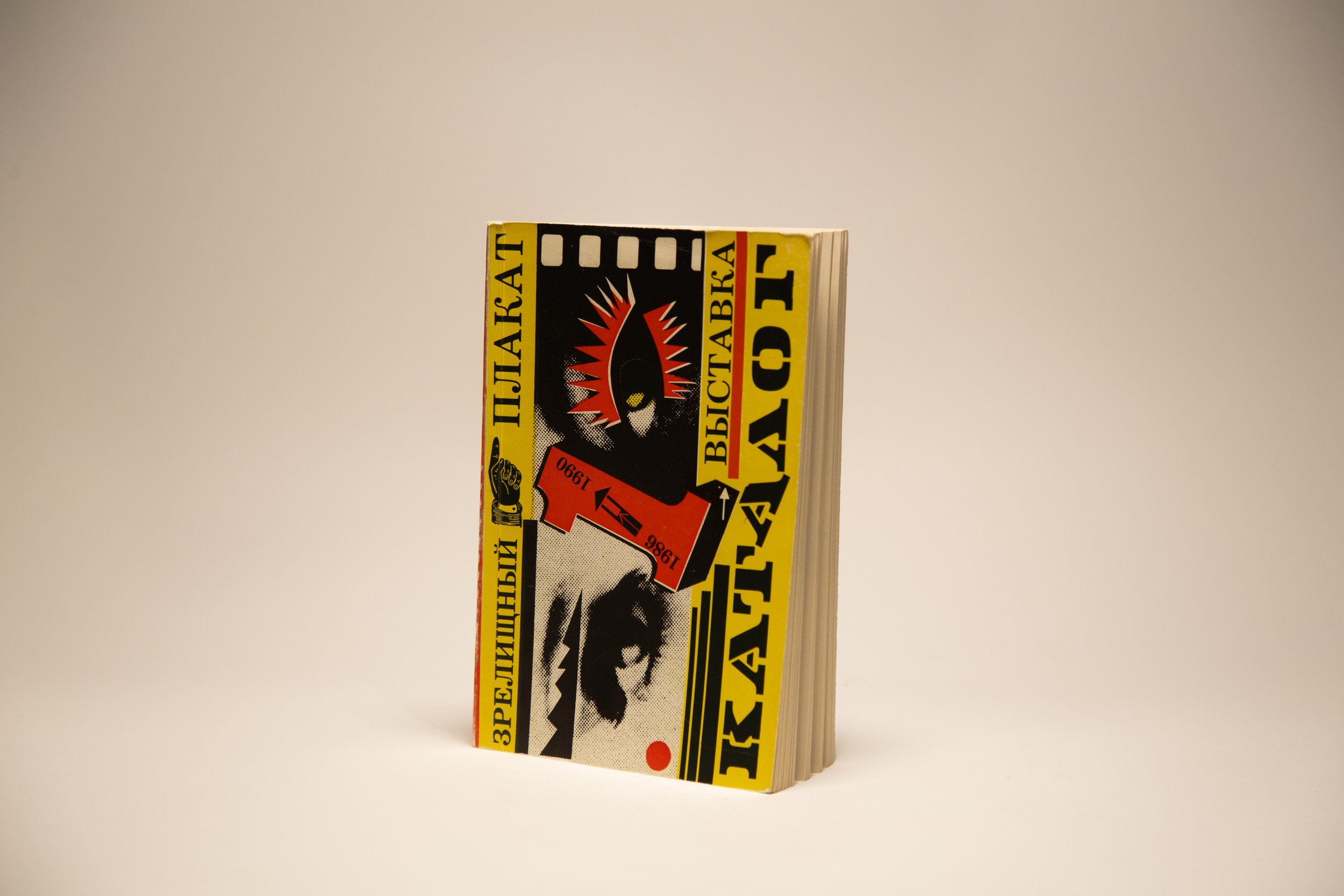
BIBLIOGRAPHIC REFERENCE: Sorvina, I. B. Zrelishchnyĭ Plakat, 1986-1990: 1 -I︠A︡ Vystavka. Sovetskiĭ Khudozhnik, 1990.
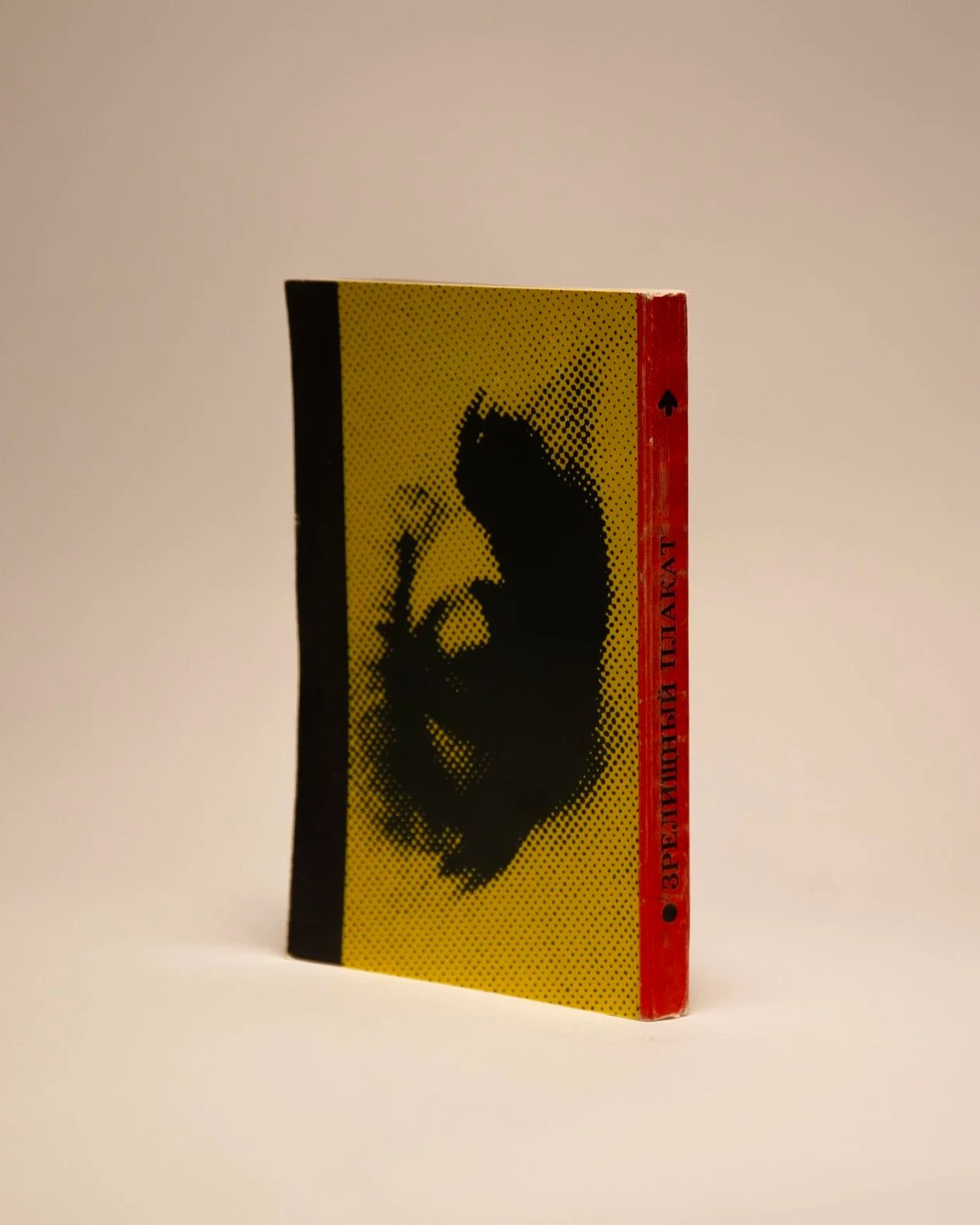
This is an exhibition catalog from “Spectacular Posters, 1986-1990” commemorating the inaugural retrospective of placards for theater performances, church events, concerts, cinema, and exhibits. The exhibit was a joint effort between the Soviet Artists’ Union and the Lenin Library. The softcover book includes black-and-white reproductions on coated paper of posters from a range of artists from across the Soviet Union. The posters reflect public discourse and cultural offerings of the glasnost period, known for new ideas, bolder interpretations and reinterpretations, criticism of and introspection regarding existing authorities and systems, and the publishing of banned literature. The exhibit occurred when state support for the arts was undisputed and reliable.
The catalog shows two posters for theatrical productions of Heart of a Dog, by Mikhail Bulgakov.
One poster dated 1989 by Victor Kundyshev (1933-2005) showed headless, upright-walking dogs marching in a military formation. The second, dated 1990 by Mikhail Fedorov (b. 1941), showed a dog clad in black leather uniform complete with the sex organs of a “maturing man” as described in the story.
Bulgakov’s novella was written in 1925, but not published in the Soviet Union until 1987. In 1925, the head of the party authority, Lev Kamenev, deemed it “unpublishable.” It is a story told partly from a dog’s point of view, about a doctor who admits he does not care for the proletariat, who refuses to cede part of his large luxurious apartment to authorities for communal living space. Thus, the doctor transplants a pituitary gland and testes from a dead petty criminal into a stray dog, Sharikov. Taking on human characteristics, Sharikov becomes a Soviet bureaucrat in charge of ridding the city’s cats.
Bulgakov was in conflict with authorities throughout his professional life.
By 1991, Bulgakov, the novelist and playwright, had “cult status” in the Soviet Union. The centenary of his birth was celebrated with fanfare, including a theater festival in the author’s birthplace of Kiev, theatrical adaptations at leading global theaters, academic conferences, and media coverage. His home in Kiev opened in 1991 as a museum.