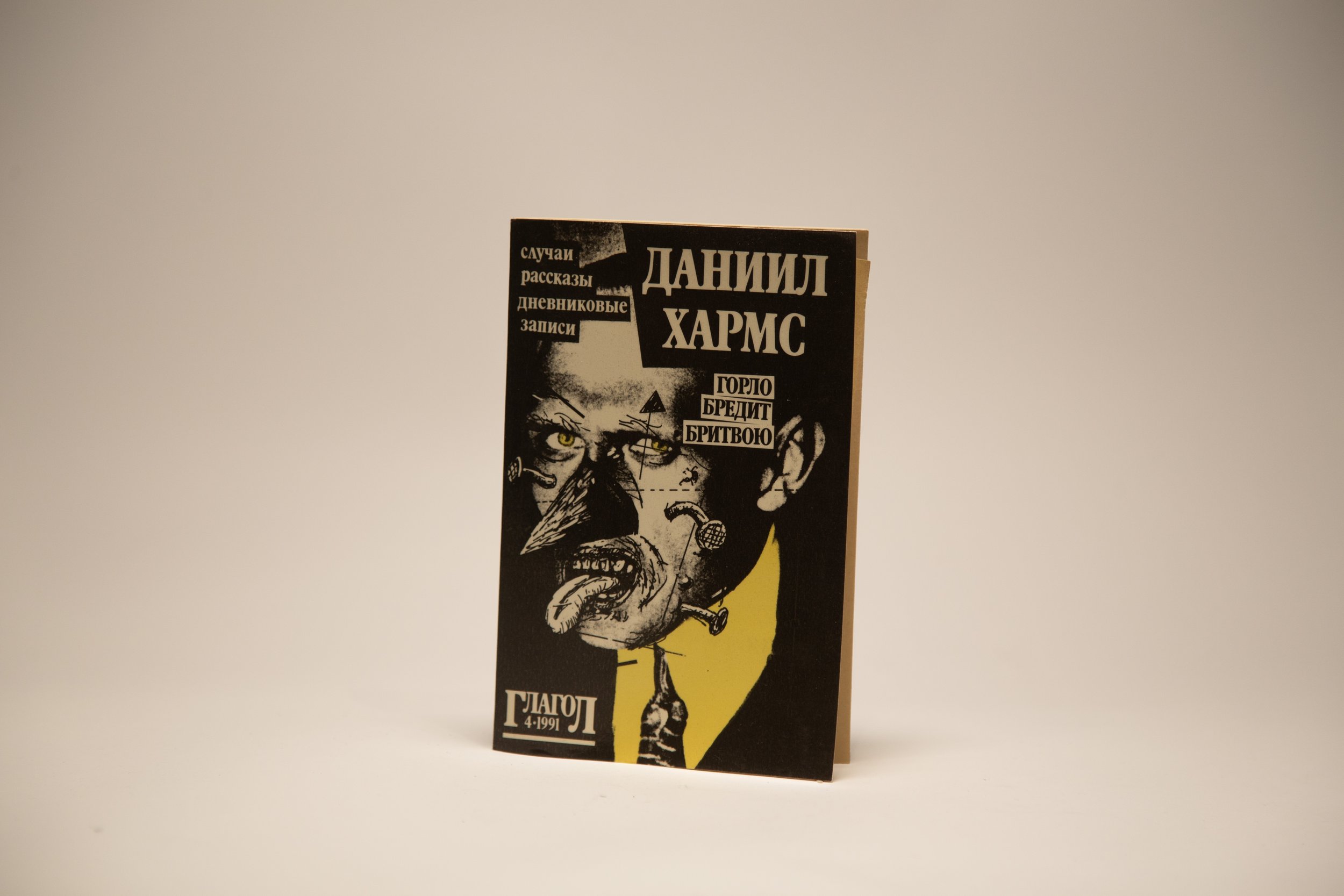
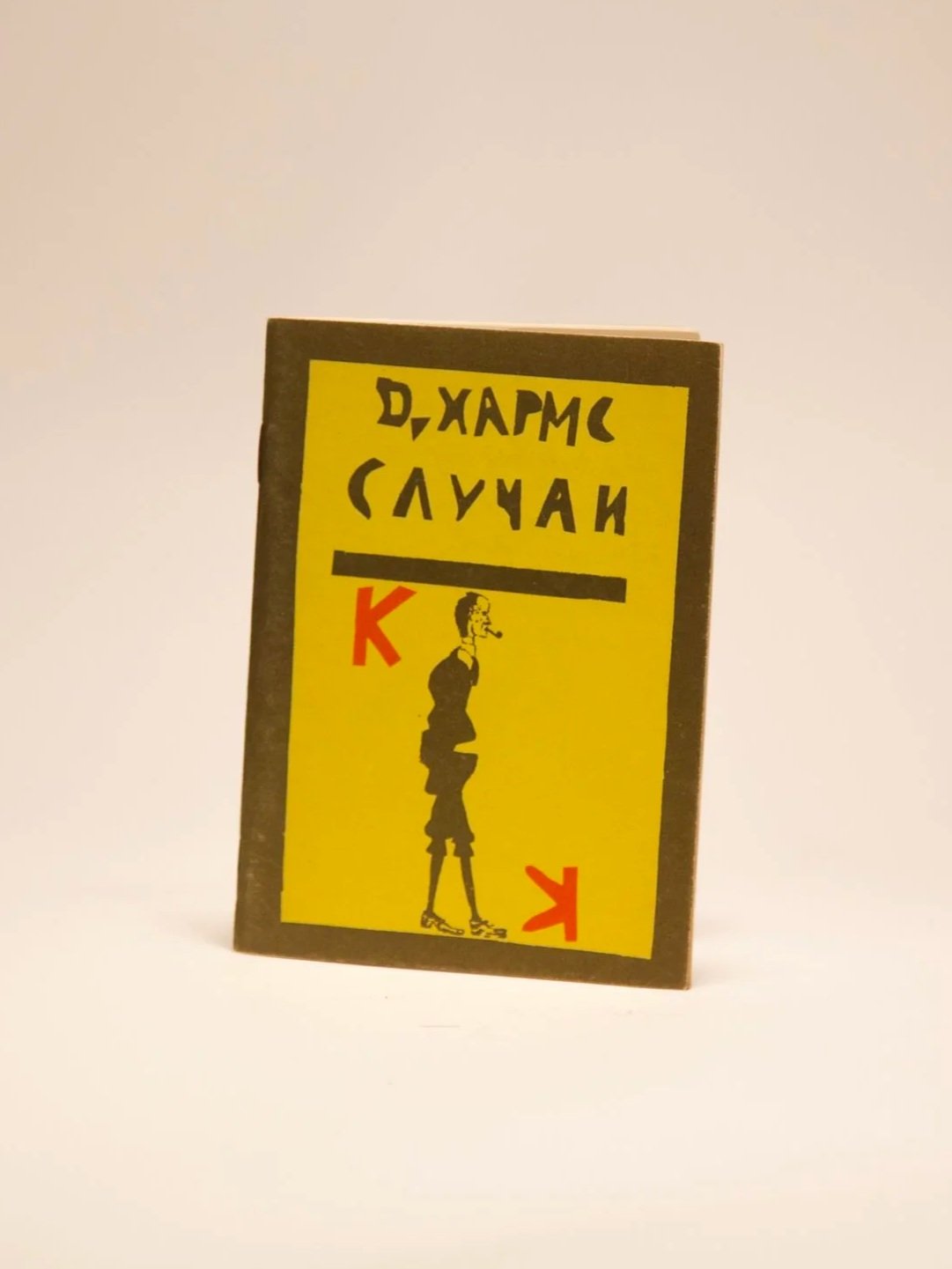
BIBLIOGRAPHIC REFERENCE: Kharms, Daniil. Sluchai. NITA. Undated.
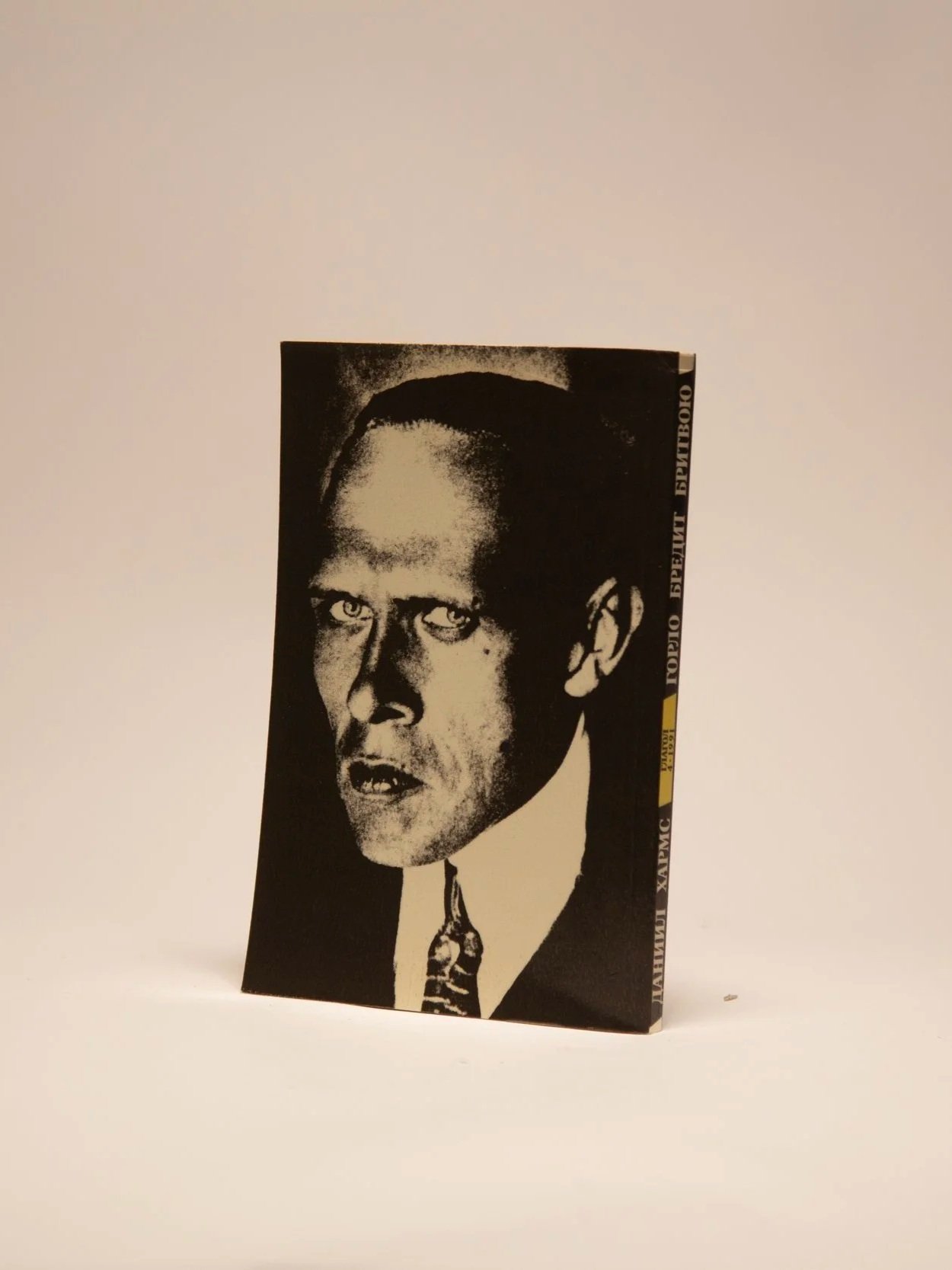
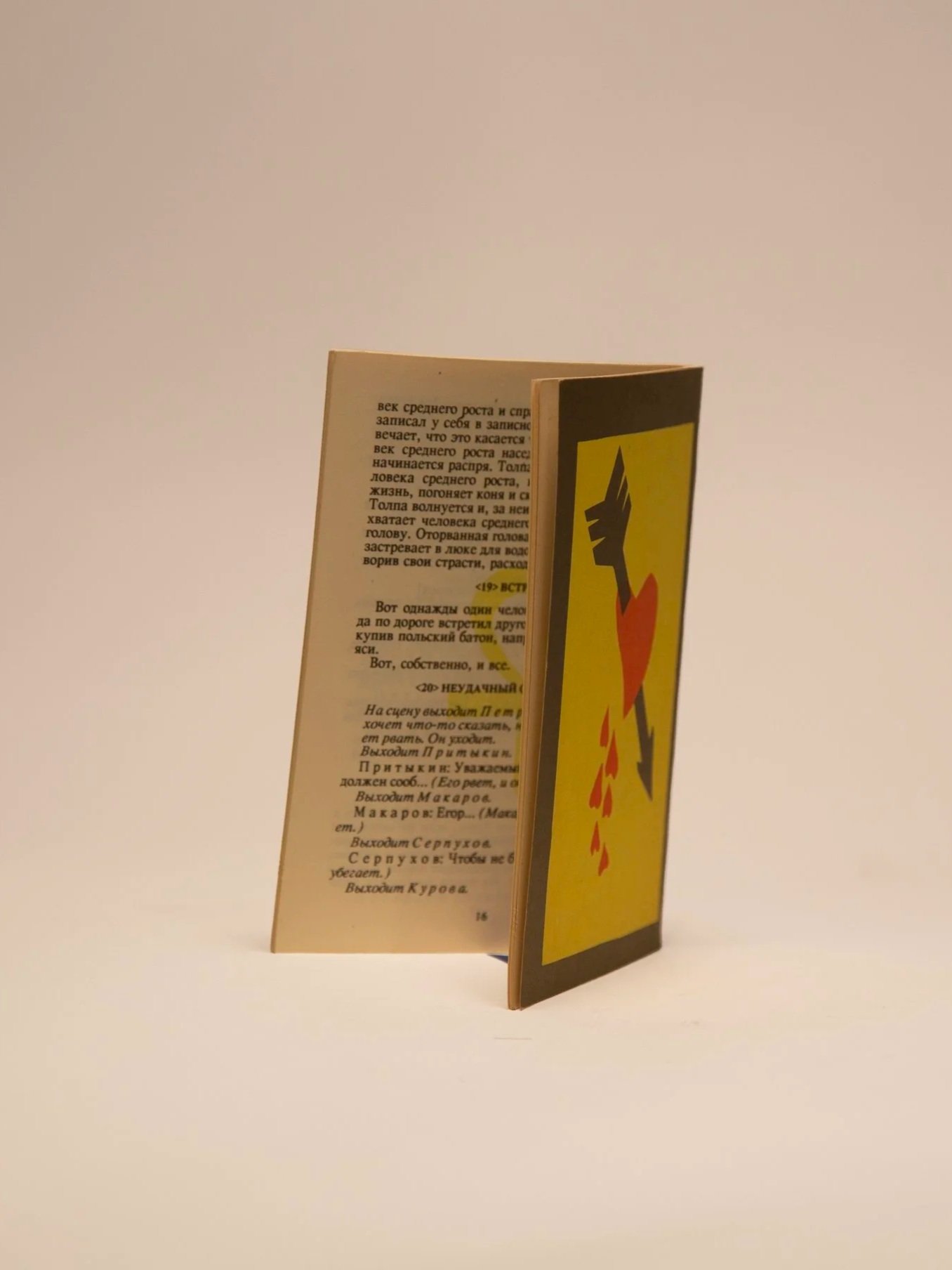
Daniil Kharms (1905-1942), known in his lifetime as a writer of poems and children’s stories with moderate success, was elevated to a major literary voice after the glasnost period. Beginning in 1960, he was rehabilitated posthumously. In the early 1990’s, as publishers sought to adapt their offerings to market demand for popular, easy-to-read titles, many versions of Kharms’ works were widely available. This version was one of many available for sale at bookstores and open-air markets.
Today, Russians know the writer as a member of the Russian post-revolutionary avant-garde, an absurdist, a non-conformist, adjacent to Russia’s Futurism movement, and a creator of dark comedic vignettes from the Stalin era.
Born as Daniil Yuvachev, when Kharms was 16, he signed his initials as DCh, and two years later wrote the full name Daniel Charms, in Latin letters, which was transcribed into Cyrillic Kharms. Scholars trace the name’s origins to the English word meaning magic; or possibly as a nod to a German-language teacher, Harmsen; or in honor of Sherlock Holmes, a favorite writer. What survives of this work is the contents of 38 notebooks, which include lecture notes, lists, comments from friends, text written in code, snippets of dialogue, among the varied collection of writings. In 1928, he helped launch OBERIU, or the Association for Real Art, a group of writers, poets, and artists who produced poetry, theatrical performances, including Kharm’s only complete play Elizaveta Bam, as well as a film. In 1927, Kharms began working in children’s literature, and had some success. In 1931, he fell victim to the Stalin regime, and was arrested and admitted to anti-Soviet crimes, and sentenced to three years in prison. His father helped facilitate a lesser, shorter sentence of exile, which he spent in the city of Kursk. In 1932, he returned to Leningrad, and returned to writing but paid employment became increasingly challenging. In 1939, he completed “The Old Woman” (“Starukha”) and short stories called “Incidents” (Sluchai). In 1941, he was arrested by NKVD agents for disseminating anti-government texts, but diagnosed with schizophrenia in prison. He likely died from starvation in the prison’s psychiatric ward.
His poems were reintroduced to Russian children in the 1960’s and 1970’s, and are now considered children’s classics. His work written for adults was published in the Soviet Union in 1965 and overseas. The first book-length work was published in 1988. Various formats of his work followed, culminating in publisher Academic Project releasing a six-volume set of his complete works in 1997-2004.