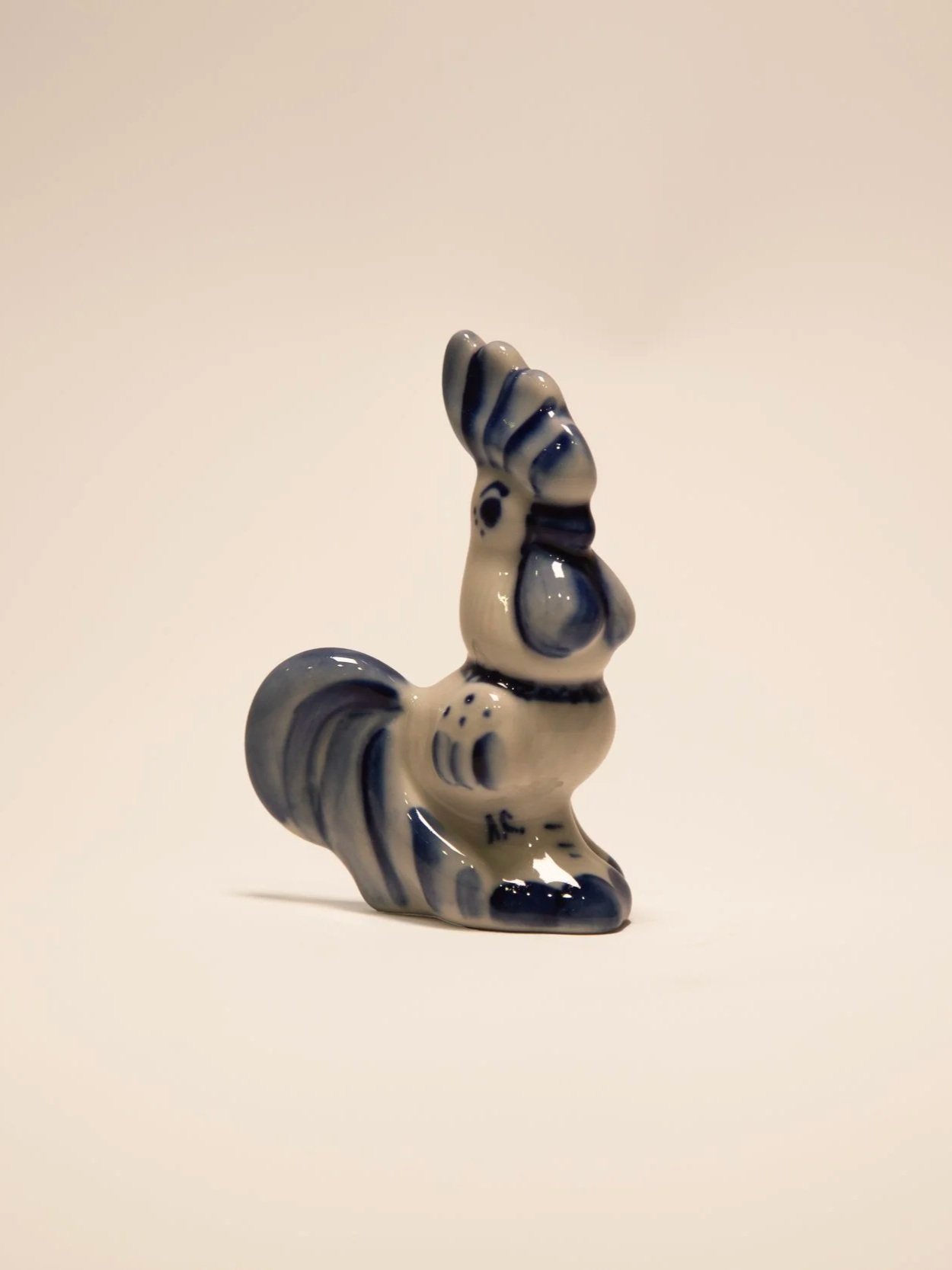
The rooster in numerous forms was everywhere in Moscow at the start of 1993. The year 1993 in the Chinese zodiac was the year of the rooster. Each year, representations of that year’s Chinese zodiac emerge in open-air markets in recognition of the Chinese new year. This blue-and-white ceramic figurine is Gzhel, named for the style's geographical origin.
Questions of identity were central in the early 1990s in Russia and Moscow, according to scholar Edith Clowes. Borders changed and the country lost superpower status. Russia and Moscow were suddenly on the “peripheries” of “influential cultures and booming economies of Europe, the United States, and East Asia.”
In the late Soviet years, a black market emerged facilitating person-to-person exchanges of coveted and hard-to-source Western goods, such as Marlboro cigarettes, Levi’s jeans, and bootleg rock music recordings. But Russians were not only looking westward at this time. Eastern philosophies, religions, and geographies also experienced a resurgence in interest as borders opened. The popularity of Viktor Pelevin, a literary star of the 1990’s, reflected this. The writer, born in 1962 in Moscow, practiced meditation and Buddhism, themes that often emerge in his work that also includes mysticism, folklore, and parody of Soviet life. For example, in Pelevin’s short story “The Blue Lantern,” published in 1991 in Russia, laborer Lyubochka is introduced to Kathmandu, an ancient cultural and spiritual center, before she discovers that she and everyone around her are actually dead. The story reached English readers through a translation by Andrew Bromfield.