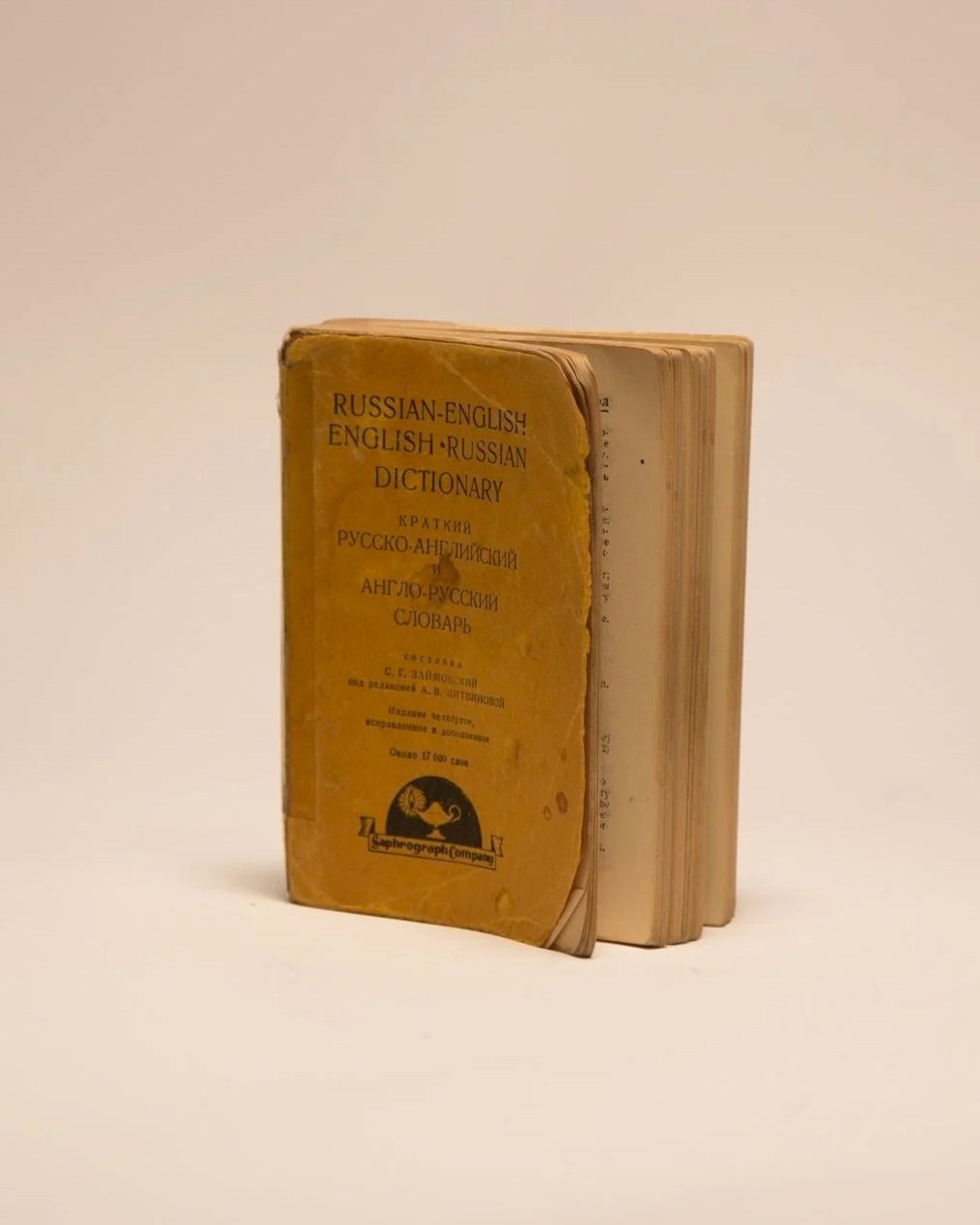
BIBLIOGRAPHIC REFERENCE: Zaimovskii, S. G. Russian-English English-Russian Dictionary. Edited by A. V. Litvinovoi, Russkii Iazik, Moscow, 1989.
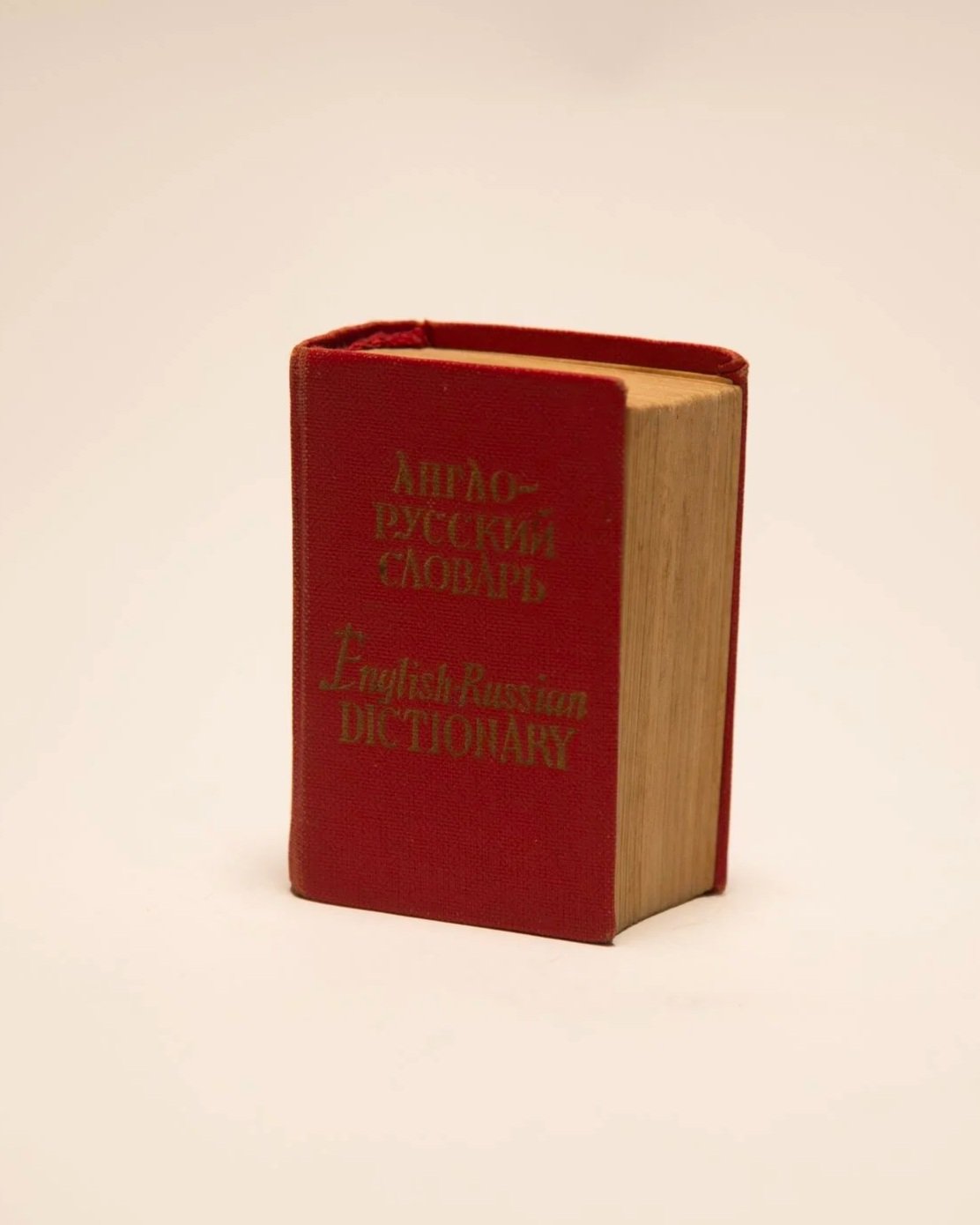
For Russian language learners in the pre-digital age, size was likely equal to quality among factors when considering a Russian-English, English-Russian dictionary. A pocket-sized dictionary, in the absence of smartphones and the internet, became an essential accessory when leaving home. This small edition, published in 1989, includes Soviet-era geographical names, such as Leningrad.
The standard-bearer among Russian dictionaries is the one compiled by Vladimir Dal, who published a volume of at least 200,000 entries in 1861. Dal’s 'Tolkovyi slovar' zhivago velikoruskago iazyka' (1861-1868) ['Interpretive Dictionary of the Living Great Russian Language'] was unique for its categorizing of and relating word roots, rather than a conventional alphabetical listing. The absence of a straight alphabetizing became less relevant when the dictionary became available electronically, in 1997, which allowed for search capabilities. Prior to that, Dal’s version was available at bookstores beginning in the 1990’s.
Tolkovyi slovar’ russkogo iazyka (Interpretive Dictionary of Russian) by Sergei Ozhegov was another authoritative dictionary. An analysis of different versions of Ozhegov’s dictionary traced the entrance of new words into the Russian language, such as kaif’s appearance in the 1999 version, but not in the 1994 edition.
The 1990’s resulted in certain language changes. One impact of glasnost and perestroika was the weakening of sources of authority, including in language. This resulted in the entrance of more swear words and slang into formal speech. Another was the increased frequency of foreign words, particularly from English, into the Russian language. Third, the end of the Soviet era rendered certain words and expressions associated with Soviet life unnecessary. One example would be the term dostat’ (get ahold of) or stoiat’ za (line up for) instead of kupit’.